My dad was an extraordinarily talented person. Beyond his usual nine-to-five work, he was a prolific writer, a gifted orator and public speaker, an actor, and a poet. Growing up in the shadow of all that talent, my sister and I often felt distinctly talentless.
He always encouraged us to read. Neither of us took to it. I wanted to be outdoors playing, and I probably read only a couple of books outside the school curriculum during my entire childhood.
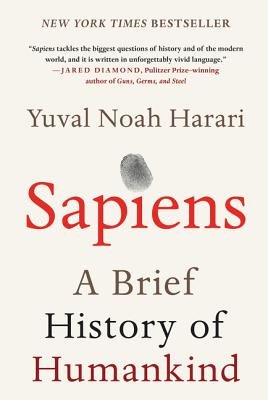
That changed during an internship at UC Berkeley. I had with me a book gifted by a friend at KAUST: Sapiens, by Yuval Noah Harari. Perhaps it was Harari's exceptional storytelling, but I stayed glued to it. For the first time, I discovered a genuine love of reading.
"Papa, I read a book!"
I immediately called my dad and told him, with great excitement, that I had read a book, followed by everything I had learned from it. As a child, history had seemed impossibly dry: just dates and events to memorize. After Sapiens, it became one of the most exciting subjects I could explore, first through books and, more recently, through podcasts when I am driving.
A few days ago, someone asked me which skills, or careers, would remain valuable as AI sweeps across industries. My immediate answer was: reading books. Thinking about it now, the answer is a little counterintuitive. AI and an abundance of instantly available information may cause reading, especially long-form reading, to decline.
To me, reading a book is akin to meditation. I meditate so that I do not lose control of my mind. The practice begins with focused breathing and leads toward metacognition: observing a thought as it passes through your mind, then choosing whether to stop it or let it be. It is difficult at first. Eventually, you begin to notice every tiny detail in your body. The sound of your breathing becomes as loud as drums, while the cacophony of the outside world fades away.
A good book can have the same effect. You become so absorbed that everything else recedes, including the impulse to reach for your phone. As recommendation feeds become more sophisticated and more addictive, the ability to unplug from that noise will become increasingly rare and valuable.
AI is making it remarkably easy to build an app, test an idea, or produce a plausible answer in moments. What will distinguish people is their willingness to go one step further: to work on problems that cannot be solved in a single prompt, and to remain with them long after the first easy answer appears. That requires the ability to put everything else aside and focus.
I believe a person who reads deeply is also training for the harder challenges of an AI-shaped world. Reading builds the patience to follow a long argument, hold competing ideas in mind, and stay with complexity instead of reaching immediately for a conclusion.
The questions I keep returning to
Much of what I read is an investigation of the human predicament and an attempt to understand reality: How did we get here? Why are we the way we are? History is one of the best ways I know to approach those questions, though the trail often leads into physics, biology, energy, philosophy, and the nature of science itself.
I usually begin a book on my Kindle. If I love it, I buy a physical copy for my small library at home. My most prized possession there is a special illustrated edition of Bill Bryson's A Short History of Nearly Everything, which I found for two dollars at a Goodwill store.
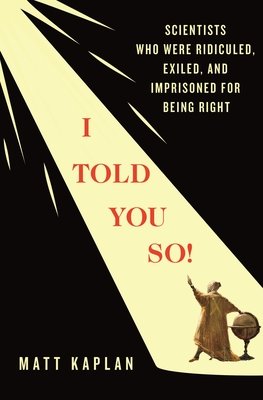
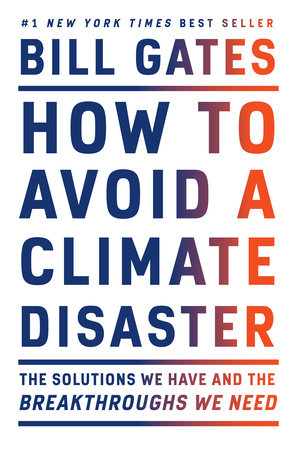
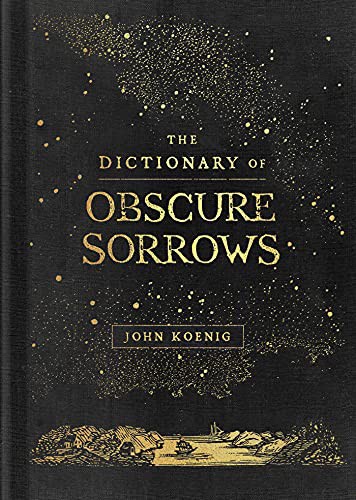
So, after all that ado, here are some books that have stayed with me, along with the ones currently keeping me company. I will strive to continue adding books to the list that leave an impression on me.